



|
|
Games in Process|
News is below twitter feed. Lew's Wikipedia entry is here.
Tweets by @lewpulsto PulsipherGames.com/Pulsipher.net, a web site for supplementary material and playtesting of games designed by Lewis Pulsipher (Britannia, Dragon Rage, Valley of the Four Winds, Diplomacy variants, Sea Kings, Doomstar, Jastings 1066, Stalingrad Besieged, Dual Britannia, RPG material, etc.), and for teaching about games. I issue a video-screencast (usually about game design) weekly (Tuesdays and Thursdays at 11 AM) on my YouTube "Game Design" channel.
|
Ask me
(almost) anything |
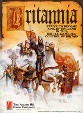
The long-time GM of Britannia tournaments at WBC and PrezCon, Jim Jordan,
tells me that Britannia has fallen out of the "Century" games at WBC for
not meeting standards for number of unique participants. And oddly enough,
the same rule prevents it from getting back via the "Legacy" method. The
community at WBC is close-knit and dedicated, but has been gradually
shrinking with time. It probably doesn't help that, barring the brief PSC
version, Brit has been out of print since 2008.
The
electronic (video game) version of Britannia is now available on STEAM
It can now accommodate more than one
player.
This uses the Second Edition rules. Next year is the 20th anniversary of that edition. I need to get the Thi9rd Edition out.
The PSC (UK) version of Britannia is long out of print. I have not heard anything about its status from the publisher since May of 2021, nor have I been paid any royalties. (I am still owed five figures of money, after my advance, for the Kickstarter itself, plus subsequent sales.)
This misfortune shows once again, that advances are vital in game contracts today. I did get a substantial advance, fortunately.
An unstructured discussion between me and Rick Stump, who I've known for a LONG time, on his "Lore with Rick" podcast. RPGs do get mentioned! (<45 mins)
I talked with James Bacon on his Bacon Gaming channel in August 2024 for more than an hour. Much of the discussion was about definitions of "RPG".
I was the guest on "Five Games for Doomsday" (choose and talk about your five favorite games, more or less). This is newly listed in mid-2024, but took place in (I think) 2022.
I was interviewed 21 Sep 20 for Dirk
the Dice's podcast (UK), Grognard Files:
Part 1 (1:29); Part
2 (1:35)
I was interviewed 2 May 20 for Grogtalk, a podcast and YouTube channel. 1.5 hours. On Youtube (so there's video). As a podcast. Episode 56.
My Stalingrad Besieged (Worthington Publishing) is available (published in February 2020).
I started playing games about 68 years ago. I started designing games more than 50 years ago. My first published (non-commercial) games appeared in the early 1970s, and my first commercial games in 1978 (Diplomacy Games & Variants), followed in 1980 by Swords and Wizardry. Most well-known: Britannia. Latest: Hastings 1066 (Worthington), Stalingrad Besieged (February 2020), Classic/Duel Britannia (2020).

Other Games:
Review of Hastings 1066 (Jan 14 2019 video) by prolific reviewer Marco Anrnaudo: https://www.youtube.com/watch?v=SrAGmMfAN_k&feature=youtu.be
I couldn't ask for better than this. (Though he doesn't even mention my name, does he?) "Lunchtime wargame" is an interesting phrase.. I call it a modern example of a microgame.
Hastings is still available from the publisher, Worthington Publishing.
Review of Doomstar by Lucas Fox:
http://www.justpressstart.net/lew-pulsiphers-doomstar-review/
I went to WBC thinking there would be no Britannia tournament, because the GM (Jim Jordan) had thought there wouldn't be enough votes to make the top 10 games to have a second chance, so to speak. We had missed (by two people) the number we needed to stay in the "100". But as I met Jim on Tuesday he said the tournament would start Wednesday as usual. Turned out that someone had organized a vote and got Brit into the top 10 second chance.
At the tournament, Ewan McNay (who has won six times) said there's a legacy rule that should keep the tournament running for quite a while. Any game whose tournament has been played for 20 or 25 years (he wasn't sure which, but Brit has been a tournament since 1991) can continue provided it gets 16 or more players each year. This year we had at least 25.
Matt O'Connor won this year for the 4th time in 10 years. He won a total of four games during the tournament. Jim Jordan was second, and thought with a little better dice luck he would have won. For example, he lost a 1 v 1 that, if he had won, would have made him King (10 more points). Matt was Blue, Jim Red.
Patrons have access to exclusive videos (from my online classes that are
otherwise behind paywalls).
A book about role-playing game design is my current project.
I am also the Emperor of Procrastination, I'm having a hard time completing any big project.
My enworld.org column Worlds of Design has been on overdrive since August after the three month hiatus for all non-news columns.
I've fleshed out The Agent Ranger D. Danger game (D for Dog),
Consulting detective Ranger and his sidekick, the wonderdog Benny, help
the police solve problems. A co-operative game I'm making for
grand-nephews and grand-niece.
Doomstar. My game Doomstar, in video form, is available on Steam ($9.99). Brief (1:15) video about "Lew Pulsipher's Doomstar".
Doomstar is vaguely Stratego-like, but immensely more fluid and quick to play, and much less hierarchical. A key is that two fighters can move together over great distances, and combine attacks together.
The game is vaguely reminiscent of L'Attaque/Stratego, but
immensely more fluid and less hierarchical, quite a different (and I
think, better and much shorter) experience.
If you want to sign up for the Doomstar PC beta, go to www.doomstargame.com/beta
Dave Shapiro on Quora answers the question "What's the best book on board game design?". He suggests four in order of usefulness. My "Game Design" is first.
My book publisher pointed me to a (favorable) review of my book in Game Nite, a free tabletop game magazine. 8 issues available. http://gamenitemagazine.blogspot.com/ Looks good and the price can't be beat, each issue about 80MB. The review is in #8.
Screencasts
I rarely get around to posting individual links to my "Game Design" YouTube channel here, so I decided to list the most recent screencasts instead.
Nuts & Bolts: The Co-op "Fail
Mechanic"
https://youtu.be/_dsnJ2N8ZNI
I explain why I call co-ops with one winner a "fail-mechanic." With
some players it just won't work.
Strategies to Respond to the "Eight
Awful Truths" of game marketing
https://youtu.be/vwmOlF9KfSY
Original Awful Truths are at https://youtu.be/DbNlo4Jgk4A
13 "Laws" of Game Design
https://youtu.be/hyvgEYZoYi4
Like many "laws", these are more strong probabilities than
absolutes.
Play to win? Nope.
https://youtu.be/Dwsq9R_qLtI
Pundits have sometimes been slow on the uptake, but it will come as
no surprise to game players that playing to win is not the objective
of many players. Keep that in mind when you design your games.
Departing from the standard (card
game) sequence of play
https://youtu.be/sfb1aWU6Ens
6/8/2017
The standard sequence of play makes a specialty card game easier to
learn. But don't "settle" for it, your game may be better with
something else.
Nuts & Bolts: How to get an
improvisers's game from a planner's game
https://youtu.be/juG7AfFcqas
6/1/2017
I describe how I changed Britannia, an historical Planner's game par
excellence, into an Improviser's space wargame, with just a few
changes. Very different experience, essentially same underlying
mechanics.
Ranking Sources of Information
About Game Design Two parts
https://youtu.be/MjmP1kD7Vyc
4/20/2017
https://youtu.be/JnrGy8DBOOU
The best way to learn is to make games. The second best way is to
talk with (and listen to) other game designers, whether informally
or in a class. After that there are many sources of learning, and
I've ranked those in a two-part screencast.
Eight awful truths about game
marketing
https://youtu.be/DbNlo4Jgk4A
I ran across "10 Awful Truths about Book Marketing" online, and
seeing the parallels with games, I'm discussing those Truths
(including the two that don't apply). Another time I'll discuss some
strategies you can follow to do your best in this environment.
There's no "Secret Knowledge" or "secret Sauce" (nor conspiracies)
in Game Design
https://youtu.be/bzvMFoH0Ejk
What do I wish I'd been told when I
started designing games?
Aspiring designers sometimes believe that there's a secret formula
to game design, and all they have to do is follow it. Nothing could
be further from the truth. The delusion seems to be common in
society these days, that there's a secret knowledge to any
discipline. It's the kind of thing that helps fuel conspiracy
theories. https://youtu.be/EQniwhThhsA
I was asked this question in an interview. It doesn't much apply to
me, I started more than 50 years ago, but I describe the advice I'd
give people starting out today.
Nuts & Bolts: The Drafting
Mechanic
https://youtu.be/vJ1HeqDyjXI
Drafting (almost always, card drafting) is a common technique in
games involving more than one side. The mechanic gives players a
greater feeling of control, but takes time.
Foolish saying: "You get what you
pay for"
https://youtu.be/RfLvBdJXxtA
"Conventional wisdom" sometimes isn't at all wise. Especially in
games, but really in all facets of life, the saying "you get what
you pay for" is foolish.
Elementary Statistics (Averages!)
in Game Design
https://youtu.be/GYIunqmPlfs
Game designers (tabletop or video) should understand elementary
math, statistics, probability. So many people don't understand that
"average" can have different meanings, that I've described the
differences here.
Is game design about
software? Heck no!
https://youtu.be/H8H4GKqRQ0g
Many schools, colleges, universities, whether deliberately or
accidentally, equate “game design” with “game development”. The
first is about how the game is supposed to work; the second is about
creating game software. Why deliberately confuse the two?
Nuts & Bolts: How a game can
derive from a bit of another? https://youtu.be/z64CmrVCYN4
It's not unusual for a game to use a system that's been successful
in another game. But sometimes one game grows out of a small bit of
another.
Constraints in games from a player
viewpoint (two parts) https://youtu.be/p_zEo1Dt0JQ
Though contemporary gamers (especially video gamers) tend to dislike
constraints, practically speaking games ARE merely sets of
constraints. Properly specified constraints can make the game
especially interesting. for the player(s).
Digital Game Pricing (2 parts)
https://youtu.be/Zr_67zmDtWQ
https://youtu.be/1ZezRtcsnJg
Some people suppose that there's a "solution" to (over)saturation of
the downloadable game market. There are lots of schemes, but I don't
see any solutions in this detailed examination.
RPGs: Stifling Creativity? https://youtu.be/anLNLWX090s
It seems too many DMs are guilty of letting players push them
around, resulting in a waste of time while a player tries to
convince the MD that such-and-such wildly unlikely occurrence should
be assigned a decent chance of happening. When you enforce the game
rules (and physics) you simply the game and keep it moving along,
you aren't stifling creativity.
Yes, the dead-kobold wielder actually said "You're stifling my
creativity." Poppycock!
Practical vs Reality https://youtu.be/kjbHNC3nkhk
Game design is a series of compromises, and major compromises can
occur when reality and what's practical in a game clash. Some
"practical decisions" result in behavior that has next to nothing to
do with reality.
Special Powers Card Games
(SPCG)
Special Powers Card Games (Magic:the Gathering, Munchkin, many
others) is a category that attracts many aspiring designers. But
designers should avoid CCGs, and look at other kinds of SPCG.
https://youtu.be/9Q4ffTs_lfk
Charlemagne and "Yomi"
This is about two different and conrasting game playing styles. I
use Charlemagne to represent "minimax" and "yomi" is a Japanese word
adopted by David Sirlin to represent those who try to read the
intentions and anticipate their opponents.
https://youtu.be/0dSh93LkeUk
The Demise of "Favorite"
Games
When I taught video game design classes I asked students about their
favorite games. Turned out, many of them had no favorites, or could
only pick the game they were currently playing. How different from
many years ago. Here's why, which has a lot to do with changes
in the nature of games and how people play them.
https://youtu.be/C4CgD9UTH1k
Why is it so hard to persuade
people to playtest prototypes?
I've just added this video to my online course "Playtesting: the
Heart of Game Design" (about 6.5 hours). Discount URL: https://www.udemy.com/game-playtesting/?couponCode=PT25
This is by far the most comprehensive discussion of game playtesting
in the world, to my knowledge. Converted to words, it's the
size of a small novel, in 64 parts, including examples of
playtesting notes I've taken over the years.
https://youtu.be/Ijq8xpV8fjs
Flexibility in Games
A seldom-discussed aspect of games - especially tabletop games - is
their flexibility. Can the game be played to varying lengths, by
varying numbers of players? Can players join in after the game has
begun?
https://youtu.be/SiG_Xhe6rQs
WBC Britannia Tournament 2016
Despite an overall 22% decrease in WBC attendance at the new venue, the Brit tournament had more participants than last year. GM Jim Jordan has written an account (PDF here).
Most of my blog posts these days point to screencasts I've released on my YouTube Game Design channel. But a recent one is 3,500 words about game players and preferences, and types of games. "Ruminations on Types of Games and Game Players, Arising from a Sojourn".
Skillshare Courses
Skillshare has closed most of my classes, and their so-called "support" has become a barrier - they're far more interested in the look of courses, than the content.
I'm adding about 20 short classes (20 minutes to an hour) to Skillshare.com in the coming months. Skillshare is a subscription-based service, you pay the monthly fee (which they hide - I can't find it, it's either $10 or $20 a month, though I've seen 99 cents for first three months) and you can participate in any of their nearly 3,000 classes. Their approach is much more self-improvement and arts than the tawdry "get rich quick - nothing's as important as money" malaise that characterizes Udemy.
In the long run, I think this will predominate over the Udemy.com model of individually priced classes. Lynda.com, recently purchased by LinkedIn, is the larger and older proponent of subscription format, but as far as I know has no game design classes. (Keep in mind I mean game design, not game development.)
Recent class opened (free, you don't need to have a Skillshare subscription): "Nurturing a College or University Game Club" http://skl.sh/29bjFf0
Learning Game Design, Part 1. $5 off ($39) Coupon 1LGD39, URL:
https://www.udemy.com/draft/
Learning Game Design, Part 2: $40. This is the second part
of the restructured "Learning Game Design as a job or a hobby"
$6 off: https://www.udemy.com/learning-game-design-part-2/?couponCode=LGDp2-34
"Playtesting: the Heart of Game Design." $10 off this new course
($25): https://www.udemy.com/game-
$6 off How to Design Levels/Adventures for Video and Tabletop
Games ($29) Coupon LevDes29, URL: https://www.udemy.com/how-to-
$10 off How to Write Clear Rules (and game design documents)
($25) Coupon WCR29, URL:
https://www.udemy.com/how-to-
$13 off Brief Introduction to Game Design ($12) Coupon BFI19, URL:
https://www.udemy.com/brief-
$8 off Get a Job in the Video Game Industry ($12) Coupon GJ3off URL:
https://www.udemy.com/get-a-
$10 off Joys of Game Design ($10) (for hobby designers rather
than aspiring pros), Coupon Joys10, URL:
https://www.udemy.com/joys-of-
This is the largest discount I can give, even though it’s twice
what my coupon was in the past.
$8 off "Introduction to (Tabletop) Role-playing Game Design"
($12) Coupon RPG16, URL:
https://www.udemy.com/intro-
If you have found one of my classes worthwhile enough to go through most or all, I'd appreciate you giving the class a Udemy rating/review. While the ratings on Udemy are not trustworthy - there are several schemes for getting "5s", including some where the instructor pays someone! - some people pay attention to them.
Other News:
I'm available as a guest for podcasts interested in someone who knows a lot about game design and the industry, and has very long experience as well. Me. I speak reasonably well on the fly - listen to my Boardgame University with Tom Vasel (#27) at http://boardgameuniversity.libsyn.com/.
The NC State student newspaper asked to do an article about me in connection with the NCSU Tabletop Gamers Club. The photographer took dozens of photos, kind of surprised by the one they selected.
Video: Jason Levine interviewed me at Prototype Con. 13+ minutes. http://www.dicetower.com/game-video/jason-levines-designer-spotlight-lewis-pulsipher. I had no warning and no prep time for this, I'd say I held up fairly well.
Pacific
Convoy. Worthington have stated in their newsletter that they
will publish my vaguely Stratego-like game Pacific
Convoy. It's on a hex board, lots of space, and all pieces can move at
least two hexes (straight line only). It's much less hierarchical than
Stratego, as well, and two air pieces can move in the same turn.
Different victory criteria, as well - you need to get a transport to the
other side of the board, no flag or command vessel to hunt down.
Interviews
There's an email "interview" with me in rpgreview.net, which is an online magazine. http://rpgreview.net/node/176
Tom Vasel interviewed me for episode #27 of Boardgame University. Download the MP3 at http://boardgameuniversity.libsyn.com/ I had no idea what he was going to ask me, so my answers are entirely off-the-cuff.
Corey Young @C_M_Young says on twitter, "BEST episode yet!"
So I must have done something right. And Tom must have asked good questions.
Conquest Europa
Wallace Nicoll has prepared a PDF edition of Roger Heyworth's game Conquest Europa. Roger was the uncredited editor of Britannia for its original publication by H. P. Gibsons in Britain in 1986. He passed away in 2000, unfortunately. Wallace was involved in the testing. http://boardgamegeek.com/filepage/99400/conquest-europa-2014
The game covers all of Europe and North Africa, from the fall of the Roman Empire to Tamerlane and beyond. With some 500 pieces, 35 nations, and 106 areas, it lasts 10-12 hours with experienced players.
When I began to think about doing a new edition of Britannia, around 2004, a 1980 all-of-Europe game I had done while developing Britannia. Though not as big as Conquest Europa, it took 12 hours to play the first time, so I set it aside and then completely forgot about it.
One of the first new games I started when I came back into the hobby was an all-Europe game, which was playtested at WBC in 2008. It turned out to be a natural five player rather than four player game. Someday it may see print, perhaps in Against-the-Odds magazine or annual. In the meantime I've devised another all-Europe game that lasts about two hours, and has been played in 1:40.
These games both end with the Mongol invasion, after starting with the fall of the West Roman Empire.
I expect that the new edition of Britannia (perhaps multiple versions) will show up on Kickstarter sooner or later, as the majority of publishers now use it.
I have spent a great deal of time testing the full Historical Version of the new edition, which is a "more accurate" representation of history than past editions. The Introductory version of that game is much quicker, a "freeform" version. But the versions that will likely attract the most people are standalone, separate games, a short (as little as 1:24 in non-solo testing) version and a diceless (2-3 hour) version. Discussion of testing is at the Eurobrit Yahoo Group.
New Google+ community: Online Game Design Learning and Teaching
This community supports audiovisual learning and teaching about
game design at online locations (such as Udemy.com,
Skillshare.com, and MOOC providers). It is about game design, not
game development (not programming, art, sound). (Most online "game
design" courses are actually about game development.)
"Game Design – a combination of problem-solving and creativity
used to create the framework, structure, and mechanics of
games. In video games, game design also involves a great
deal of communication with the people who actually make the
software. Making and marketing the game is not part of game
design, though very important to the success of a commercial
game. Game design has little to do with visual arts and
nothing to do with computer programming." (Excerpt from the book
"Game Design" by Lewis Pulsipher, McFarland
2012)
Results of my game designers' survey are in my blogs, e.g. http://pulsiphergamedesign.blogspot.com/2013/04/2012-13-game-designer-survey-results.html
Amazon's current price of the book is $34.20 for paper but just $14.74 for Kindle! List is $38 for paper.
If you've read this book, I'd appreciate you posting a customer review on Amazon.
Reviews:
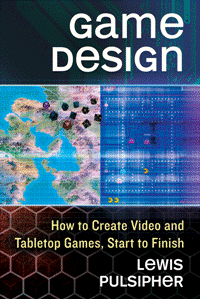
Very complimentary review by Jeffro (Jeff Johnson) from late May '14. http://jeffro.wordpress.com/2014/05/26/book-review-game-design-by-lewis-pulsipher/
From ARBA vol 44 p. 16 (final sentence): "Although a single book cannot substitute for education in game creation or practice, this book provides useful tips and resources for game designers and those interested in entering the field." This is another professional, subscription only journal so I cannot provide a URL (I got a non-convertible PDF from my publisher).
Pages 25 ff in Diplomacy World #121 (April '13) contains Jim Burgess' rather stream-of-consciousness review of the book, as related to the game Diplomacy. Diplomacy World has been the flagship magazine of Diplomacy fandom for over 30 years, and recently under editor Doug Kent is a massive quarterly free download at http://www.diplomacyworld.net/. I was active in the hobby in the 70s, and have designed more published Diplomacy variants than anyone, I think.
From March 2013 Choice Online Reviews: by A. Chen, Cogswell College: "Summing up: Recommended. Lower-division undergraduates and two-year technical program students in game design programs and professionals/practitioners." (An image of this was sent to me by McFarland. I don't have a URL - I think Choice, a journal for academics, is subscription-only.)
New (7 Feb 13) review by Michael Fox at Little Metal Dog Show (a well-known UK game blog). "Rather than having someone standing in front of you, telling you what to do to move on, Lewis’ writing feels more like he’s sitting by you, making helpful suggestions on how to get out of sticky design issues and encouraging you to think your way through the stages of your game."
Book review - Game Design by Joe Huber (3 Dec 12). "So summing it all up, Game Design does an excellent job of providing a path to become an effective game designer."
Review: Lewis Pulsipher’s ‘How to Design Epic Games' by David Bolton. (Yes, he knows the actual title.) "If you want to design games, as opposed to just produce them, this is a great book. It hits the ground running, though you’ll need to read it quite a few times for everything to sink in. . ."
From a reader review on Amazon.co.uk: "There is scarcely a spare word in this book, and that's a good thing. You know the author is not wasting your time because he is not wasting his. . . . He gets to the point: "You want to make games, Johnny? The only way to do it is to do it". I know it seems obvious, but sometimes you just need to be told, and it's refreshing not to feel that the author is winking at you like they have a secret which they've promised to share and never do. I did not feel that this author held anything back, and now I have something really extraordinary on my shelf: a textbook that's not only become my go-to reference, but also an inspiration - believe it or not, it's exciting!"
Electronic formats:
The book is available in a "Nook Book" (ebook) edition from Barnes & Noble for $24.99 (used to be $13.74).
The book is available in a Kindle edition for $17.99 (used to be $14.74) (compared to $38.00 for the paperback). Kindle is Amazon's format, but with a free app you can read Kindle books on PCs.
You may know that you can get a free PC program that lets you read (and buy) Kindle books. I don't know if something of the same kind is available for eBooks.
Books-a-Million are offering NookBook copies of my book at $24.99 (used to be $28.65). eBook is the standard for e-readers other than Amazon's Kindles. The PDF version is no longer listed.
I have not seen a copy of either of these formats. Something to keep in mind for future contracts, getting a copy of the electronic versions.
Table of Contents and excerpts:
PDF Table of contents HTML Table of Contents
The first 27 pages, and page 268, of my book are readable on Google Books.
Excerpt on GameCareerGuide: A systematic view of game design
Excerpt on GameCareerGuide: What Makes A Game 'Epic' Or Even 'Great'
The book is now being offered by some small sellers for less than the majors are selling it for (paper version).
It's available in the UK from Amazon UK and Waterstones.com.
Unsolicited Testimonials:

"I found your book to be very useful Lewis because it doesn't have a one size fits all approach. There are a range of issues to consider and solutions offered for a variety of challenges in game design. I was able to check issues I'd come up against in my game design and find either that I had approached things in one of your recommended ways (due to intuition or collective consideration by our game dev group), or you gave me new ideas to try or things to check.
Over all this a great generalist game design book for tabletop games." Kim Brebach (This is a post on a boardgame site. The book is a video game design book first, tabletop second.)
Use in class
Scott Nicholson wrote recently to let me know that "I've decided to adopt your game design book as my primary text in my 'Transformative Game Design' class I'm teaching in the spring at Syracuse University. I reviewed a wide variety of game design texts, and found yours to be the best for what I need!
Great job!"
Thanks, Scott. The book is "Game Design: How to Create Video and Tabletop Games, Start to Finish". Dr. Scott Nicholson is an Associate Professor at the School of Information Studies at Syracuse University and the director of the Because Play Matters game lab. He's well known for "Board games with Scott". Transformative games are games intended to change the player in some significant way.
Outside the USA
People outside the USA might consider using Book Depository to order, as they have free shipping to about 50 countries. I have not used it myself but see references to it.
I am using twitter regularly now. I am @lewpuls.
After sales of 16,000 the FFG version of Britannia has sold out (though it's still available in some stores, FFG has no more). I've received a notification from FFG that the contract is terminated. So I have been looking for another publisher for a revised edition, and have two strong candidates.
The plan for the new editions of Britannia - don't forget that plans don't always work out - is that there are several versions. The standard version that has been available in the past will be changed more than I anticipated when I started out two months ago, primarily to make it work better as a way of teaching/understanding British history - to make it closer to reality, if you will. In the process the game has changed some, which I also think will be interesting for players. In particular I've eliminated some things that I strongly dislike. First, it won't be possible for the Romans to make a deal with the Welsh, who then submit although never touched. This time, they Will Fight. Second, it won't be possible for a "starving army" to commit virtual suicide by making a bad-odds attack. Its compatriots will have to come along. Third, we won't have the Romano-British scurrying for the hills, abandoning their homes and farms. But they'll be in better shape than in the old game.
It also won't be a Roman walkover with Romans even known to be killing Caledonians. The Roman will have more difficult choices. Unfortunately, players who tend to make a hash of the Romans now, when it IS often a cakewalk for an experienced player, may REALLY make a hash of it in the new version. There's always a problem in games, whether to design for the 99% expert player or the 33% or the 75%. When the 99% expert is going to work a bit, the 33% may just get creamed. Fortunately, the Roman-British are MUCH more prominent in the game - for a while.
There's a smaller, diceless version ("Rule Britannia") that uses a new board (21 land areas including Ireland); and a quick, really small (nine nations) "Gateway" version (no set title, tentatively "Britannia Brevis") that also uses a new board (18 land). The Gateway version appeals to people who like Risk and Axis & Allies (but remember, 60-90 minutes) and to video gamers. Rule Britannia should appeal to people who don’t like dice (battle cards, each player has an identical set). Less than three hours.
There's also an "Ultimate" version that uses the standard board with the addition of Ireland, and will be significantly longer than the standard game (Epic, get it?). But it will be an expansion, not part of the standard package. Ireland will be on the standard board, even though it won't be used in the standard game.
The standard game (likely called "Epic Britannia") will come with several shorter scenarios (4-9 turns), and a new three player game that I am trying very hard to balance, and a 6-7 turn game that covers the entire period using the same colors/sides, and will take half as long to play.
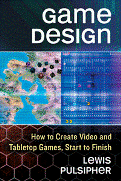
My book "Game Design: How to Create Video and Tabletop Games, Start to Finish" is available. Publisher's web page for the book. Amazon. As you might expect, I make a lot more from a copy ordered through McFarland than through Amazon, but most people use Amazon's free shipping.
It can be ordered from McFarland or from retail book sellers. Because McFarland's first market is libraries, you have an alternative not practically available for most books: you can request that your library order a copy. Many public libraries will respond to suggestions/requests, though many of those want more than one person to make the request.
Why would you read a book? While the book is no longer the absolute treasure trove of information that was when I was a kid (see below), it still organizes information in an easily digestible form. But more important, a book can convey the experience of the author to the reader, and if that experience is valuable than this is something the reader won't get anywhere else. A major purpose for me in writing the book is to help beginning game designers avoid the "school of hard knocks" that I had to go through, applying my experience in teaching novice game designers as well.
When I was a kid in the 50s and 60s, if you were lucky you had three television networks to watch instead of two, there was no Internet and consequently no e-mail, no cell phones, no personal computers (or printers), no World Wide Web, no Facebook, no Twitter, no YouTube. A long distance call of any length cost real money. I first saw color TV in a person's house when I was 10 (trick-or-treat: the people let the kids come in and see their cool color TV). Music was on vinyl LPs and (later) cassette tapes. If you wanted to watch a movie you stayed up after 11 (old movies only on TV) or you went to a theater, there was no way to record a movie other than film. There was no instant replay on sporting events because videotape had not been perfected.
In that era, as for generations before, a book was a treasure trove of information, something to be read carefully and absorbed as much as possible.
Nowadays people are much less impressed by books because there's so many other sources of information, but if you really want to learn about something in depth a good book is the best way to do it other than having an experienced person teach you directly.
I was the guest on the Ludology podcast #26 about epic games (tabletop games, not the video game company). This is the only podcast I listen to, because it's about "the why of games", not about new games and community chit-chat. I've also converted this to a video that is on my Game Design YouTube channel.
My blog is posted, now, in as many as five places, reaching a quite different readership at each place. The blog has existed since 2004 but I "spread out" only in 2011.
The "home" is at: http://pulsiphergamedesign.blogspot.com/; on Boardgamegeek (and the other geek sites); on boardgame designers forum; on "Fortress: AT" ("Ameritrash"). Some, but not all, of the posts are also on my "expert" blog on Gamasutra, the site for video game professionals.
The sometimes-lively discussions at BGG, fortress:at, and Gamasutra, where most of the readers are, are usually very different from one another.
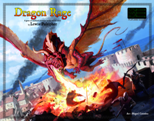
Dragon Rage is now distributed in the USA exclusively by Iello. I understand the print run as a whole is practically exhausted.
There is some possibility that a Kickstarter will be run to help fund a large reprint that is likely to reduce the price.
A very complimentary Dragon Rage video review (in accented English this time) that could be used as a tutorial before people play their first game. On Youtube. Also on BGG with comments.
Michael Barnes' review on fortressat.
Boardgamegeek's video about Dragon Rage.
A review of Dragon Rage appeared in a British blog. Also on BGG.
Video review, in German, of Dragon Rage.
A review of Dragon Rage on Opinionated Gamer. Another review on Opinionated Gamer (scroll down past Rumble in the Dungeon).
Another review, from "Fortress Ameritrash"! I have to quote this one: "It’s an absolute grab-bag of fun fantasy memes and is certainly the most customisable wargame without miniatures that I’ve ever seen."

The multi-contributor ETC Press book "Tabletop: Analog Game Design," edited by Greg Costikyan and Drew Davidson, is now available (electronic downloads free). Greg briefly describes it. Downloads here in electronic book and PDF formats.
My piece on "The Three Player Problem" is the first chapter in the book.
Slides and audio recordings of my game design talks at UK Game Expo and Origins are here.
The reissue of Dragon Rage is in print. The game (published in Belgium) is available in American stores, or direct from GameSalute. You can order from www.flatlinedgames.com.

The physical components are very impressive (compared with the original microgame), on a par with Britannia. The hit recording sheets are full-size plasticized cardboard, as opposed to the original notepad. The board is fully mounted, and has an orc lair on the opposite side, with new scenarios. You can see from the photo that the pieces are individually cut and have round corners, not like the typical wargame with square-cornered little pieces.
This version includes a second map (of an orc lair area, more or less) and additional scenarios for it, devised by Eric Hanuise.
Welcome to PulsipherGames.com/Pulsipher.net, a web site for supplementary material and playtesting of games designed by Lewis Pulsipher (Britannia, Dragon Rage, Valley of the Four Winds, Diplomacy variants, RPG material, etc.), and for teaching about games.
I started playing games more than 50 years ago. I started designing games more than 45 years ago. My first published (non-commercial) games appeared in the early 1970s, and my first commercial game over 30 years ago, in 1978 (Diplomacy Games & Variants), followed in 1980 by Swords and Wizardry.
After publication of several commercial games, and after I earned my Ph.D., I took 20 years off from designing games, though I played and made up adventures (which is level design) and refereed lots of Dungeons and Dragons while learning computing, programming, networking, and making a living. In 2004 I decided to get back into game design rather than write computer textbooks, though my primary profession is college teaching. I taught my first course in game design in fall 2004, though I did not teach games full time until fall 2007.
I do not run a public Web discussion board on this site, as Boardgamegeek.com serves the purpose very well. The Eurobrit Yahoo Group is the main location for Britannia discussions. Fantasy Flight Games also has a discussion board (generally inactive) at their Britannia site. Most of my new writing about games is posted on my blog, http://pulsiphergamedesign.blogspot.com/ or at http://teachgamedesign.blogspot.com/, or on GameCareerGuide.Com.
Dr. P's personal recommendation for those who want to get into the game industry and live in this area (central-eastern North Carolina).
Notice:
Lewis Pulsipher and Pulsiphergames.com do not accept or consider unsolicited submissions, ideas or materials, such as games, game ideas, treatments, books, story ideas, or characters. Any unsolicited materials submitted will be disposed of without review.
Disclaimer: occasionally people send me unsolicited ideas or concepts for games. Be aware that when you do this you acknowledge that I may use your ideas in any way I wish without legal obligation. (I'm unlikely to do this, but I may have the same idea already, and I have no desire to be sued by someone who doesn't realize that ideas are not protected by copyright law in any case.)
Recently played video games: Gratuitous Space Battles, Angry Birds, and several "social network" games. I played the latter (all Zynga games) because I was talking with them about the possibility of working as a game designer in Bangalore India. But the current emphasis in these games is on frustration (to persuade people to spend real money), and that's the opposite of what I want to create. Further, I suspect Zynga is stuck in the rut they've made, a company so large that they may not be able to risk trying games drastically different from the ones they now support. I know what kind of social network game I would make, first and foremost to make it truly social, not solitary.
More recently I've reconciled myself to using Steam and have bought Civilization V and Skyrim to go along with Portal, but who knows when I'll have time to play them!
I have never designed a published "computer game", largely because I have not known anyone able and willing to do the necessary programming and artwork. I have never been interested in starving in order to produce a video game. Nowadays, of course, computer games are the products of teams, not of individuals. Back when one individual could write a game, I was a database programmer, which doesn't help much with computer games, nor do I have a hint of an artist in me.
Why would I want to design electronic games? I'm better off as is:
1. The "AAA list" electronic games are really designed by committee. When I design a game, it is almost all MINE. (The rest is playtesters and publisher.)
2. Video games, until fairly recently, were almost always interactive puzzles, not games. Games are about people, interactive puzzles are about computers. I like games, not puzzles.
People become computer game designers after working on computer games for a company in other capacities, especially level designer. Practically no one is hired directly as a computer game designer, though level designers (a subset of game design) may be hired directly from school. The production costs for "big" off-the-shelf games ($10-100 million) make a person without a track record too much of a risk.
Click here for advice for those who want to get into the game industry.
| |